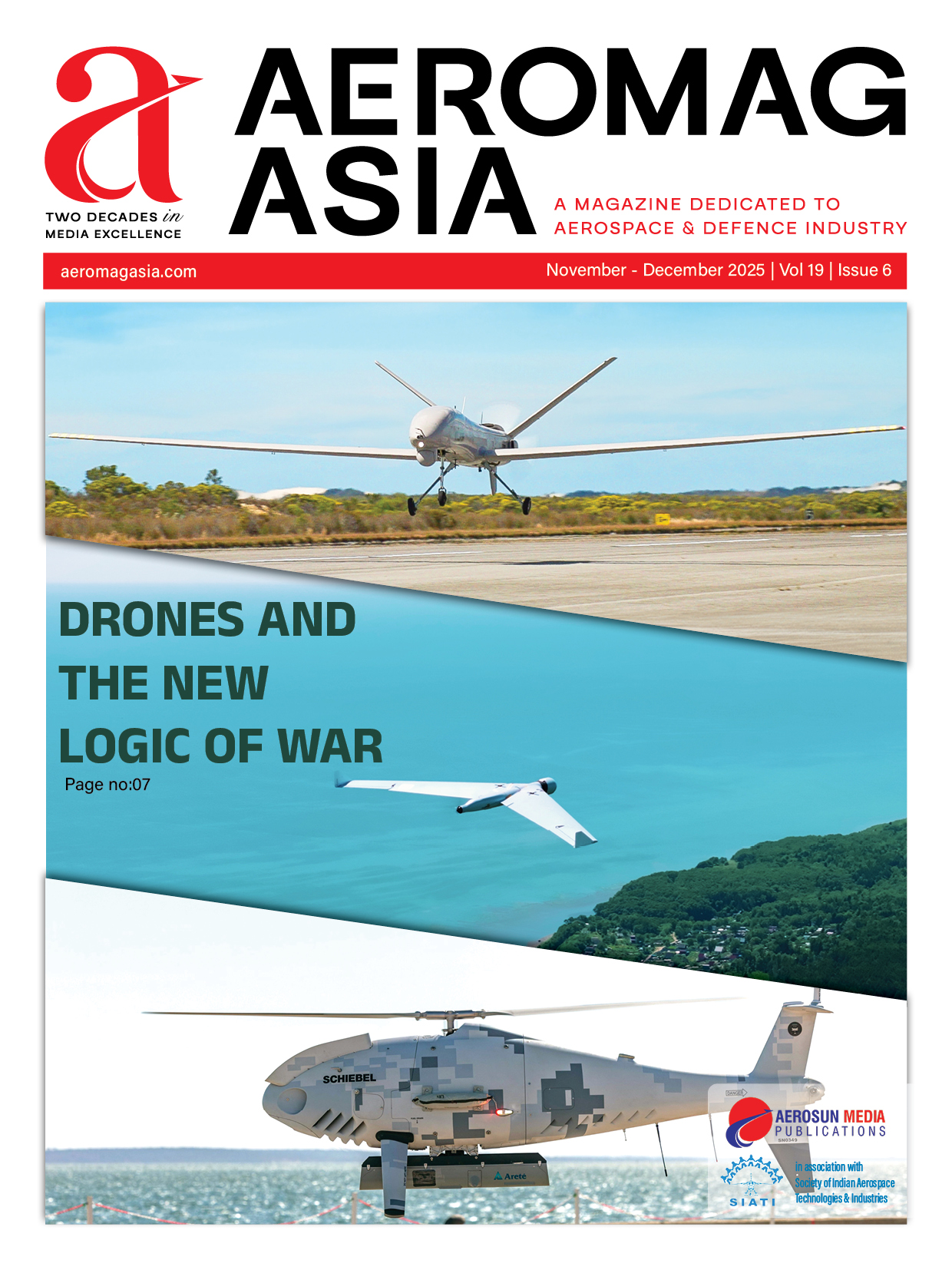


In an age of hybrid warfare, rapid technological shifts, and global uncertainty, armed forces must remain agile to respond effectively. Traditional defence architectures, where hardware and software are tightly bound, are too rigid and slow for modern missions. Software Defined Defence (SDD) provides a future-oriented framework — modular, interoperable, and adaptive — that enables defence systems to evolve dynamically.
From rigidity to flexibility
Conventional systems are costly and slow to update. Each new capability requires hardware changes, complex integration, and testing, delaying readiness. SDD breaks with this paradigm. It separates software from hardware, establishing a standardized running environment with defined interfaces and orchestration functionalities.
Borrowing principles from the cloud world — such as container architectures, resource pooling, and on-demand scalability — SDD enables defence forces to deploy new functions quickly without redesigning platforms. Much like a smartphone, the hardware stays constant while software continuously evolves.

Responding to dynamic realities
Modern security challenges evolve rapidly. At the AFCEA conference, PLATH experts highlighted a case of ageing oil tankers crossing the Baltic Sea — potential environmental and geopolitical threats that require immediate adaptability. Traditional systems would take months to respond; SDD allows near-instant reconfiguration to the missions need.
Through modular software and standardized interfaces, operators can adjust software parameters on the fly — meeting the demands of unpredictable, multi-domain scenarios.
Overcoming old limitations
Legacy systems are defined by rigid hardware dependencies, slow upgrade cycles, and high costs. These constraints reduce operational effectiveness, particularly in missions with high data volumes or time-critical communication.
SDD, by contrast, supports continuous integration and automated updates. New capabilities can be deployed as software applications — reducing downtime, improving flexibility, and enabling interoperability across forces and platforms. This is also the enabler for effecticve use of unmanned vehicles like our VTOL drone Sigfly.
Standardised architecture as the backbone
At its core, SDD uses a service-oriented architecture where functions are software-defined rather than hardware-bound. This creates a shared foundation that is scalable, interoperable, and secure.
Cloud-derived principles such as automated provisioning and elastic scalability make it possible to deliver mission capabilities on demand — allowing defence operators to adapt across land, sea, air, and cyber domains in real time.
Modularity for multi-domain missions
Modern missions — from surveillance to electronic warfare — require flexibility. With modular payloads and plug-and-play components, SDD allows operators to reconfigure platforms instantly.

A VTOL drone, for example, can switch from reconnaissance to communications monitoring mid-mission by changing its payload. This modularity extends mission endurance and simplifies upgrades, ensuring platforms stay relevant without costly redesigns.

Intelligent data networking
A crucial part of SDD is a Data Distribution Service (DDS), which ensures real-time data flow and coordination across connected systems. DDS fuses situational data from multiple sensors, prioritises it according to mission needs, and maintains NATO-compatible interoperability.
It also supports bandwidth optimisation and integration of legacy assets — transforming data sharing into a key enabler for multi-domain autonomous operations.
From concept to capability
Software Defined Defence is already being tested in operational environments. PLATH and its partners are developing demonstrators such as VTOL drones equipped with modular payloads and DDS-based networking. These platforms demonstrate what is achievable now:
Conclusion: Building agility into defence
In an increasingly unpredictable world, agility defines operational superiority. Software Defined Defence turns adaptability into a decisive capability by merging modularity, open standards, and intelligent networking.
It enables defence forces to evolve continuously, integrate seamlessly, and respond rapidly to emerging challenges — providing the foundation for the defence systems of tomorrow: modular, networked, and mission-ready. To ensure the sovereignty and security of our future. To protect and prevent.
Related News from Land Systems
Land Systems
Viper Shield: The Advanced F-16 Electronic Warfare Solution for 2027 and Beyond